| Feature | Non-Surgical Decompression | Surgical Decompression |
|---|---|---|
| Incision required | No | Yes |
| Recovery time | None, resume same day | Weeks to months |
| Anesthesia | None | General or regional |
| Risk of infection | None | Present |
| Typical session length | 30-45 minutes | 1-3 hours (procedure) |
| Cost range | Lower, per session | Higher, with hospital fees |
| Can combine with PT | Yes, recommended | After recovery period |
To learn more about how this gentle, non-surgical treatment can help you live with less pain, read about the non-surgical spinal decompression options we offer. You can also review clinical studies from the National Institutes of Health to see the research behind this technology.
Conditions Treated with Spinal Decompression Therapy
Chronic back pain can stop you from enjoying simple daily tasks. When traditional treatments fail to give relief, spinal decompression therapy offers a non-surgical path forward. This precise method gently stretches the spine to relieve pressure on damaged structures. By targeting the root cause of spinal pain, this therapy can help you return to active living.
Herniated and Bulging Discs
Your spinal discs act as soft cushions between your bones. A herniated disc occurs when the soft inner nucleus leaks out through a tear in the tough outer ring. In contrast, a bulging disc occurs when the disc simply sags outward without tearing. Both conditions can pinch nearby nerves and cause severe pain.
Motorized decompression creates a vacuum-like negative pressure within the disc space. This pressure pulls the bulging or leaked material back toward the center of the disc. At the same time, the gentle stretching pulls nutrient-rich fluids and oxygen into the damaged area to help it heal. Research published by the National Institutes of Health shows that spinal decompression therapy achieves an 86% rate of good or excellent results for ruptured discs, compared to just 55% for standard traction therapy.
Sciatica and Degenerative Disc Disease
Sciatica is a sharp pain that travels from your lower back down through your leg. It occurs when a bone or disc pinches your sciatic nerve. Decompression therapy opens up the narrow spaces where these nerves exit your spine. This action removes the pressure on the nerve to stop the radiating pain and burning feelings.
Degenerative disc disease occurs as you age and your discs lose water and shrink. This wear and tear makes the discs less flexible and can lead to bone rubs. Gentle decompression therapy helps by drawing fresh fluid back into the worn discs. This hydration helps restore the natural height of the disc space and reduces chronic aching.
Spinal Stenosis and Facet Syndrome
Spinal stenosis occurs when the bony canal that holds your spinal cord narrows. This narrowing can pinch vital nerves and cause leg weakness or numbness when you walk. Facet joint syndrome is an arthritis-like wear on the small joints that connect your spinal bones. This wear causes stiff, painful turns in your neck or back.
Spinal decompression therapy helps both of these conditions. By widening the joint spaces, it reduces bone rub and takes the pressure off pinched nerves. This gentle mechanical stretch helps reduce swelling around the small spinal joints to give you better movement and less stiffness.
Your Candidacy and Clinical Evaluation
Not everyone is a candidate for this care. This therapy is ideal for people with disc pain, but some medical conditions are unsafe for treatment. You cannot use decompression if you have spinal fractures, bone tumors, severe osteoporosis, joint infections, or metal hardware in your spine.
To find out if this care is right for you, we perform a complete clinical evaluation. We review your medical history, perform a physical exam, and study your recent MRI or X-ray scans. This step ensures that decompression is a safe option to help you reach your health goals.
What Does a Spinal Decompression Treatment Plan Look Like?
Starting a new medical care program can bring up many questions. You want to know what to expect from the very first visit to your final session. A typical spinal decompression therapy plan is not a single quick fix. Instead, it is a structured journey designed to help your body heal naturally.
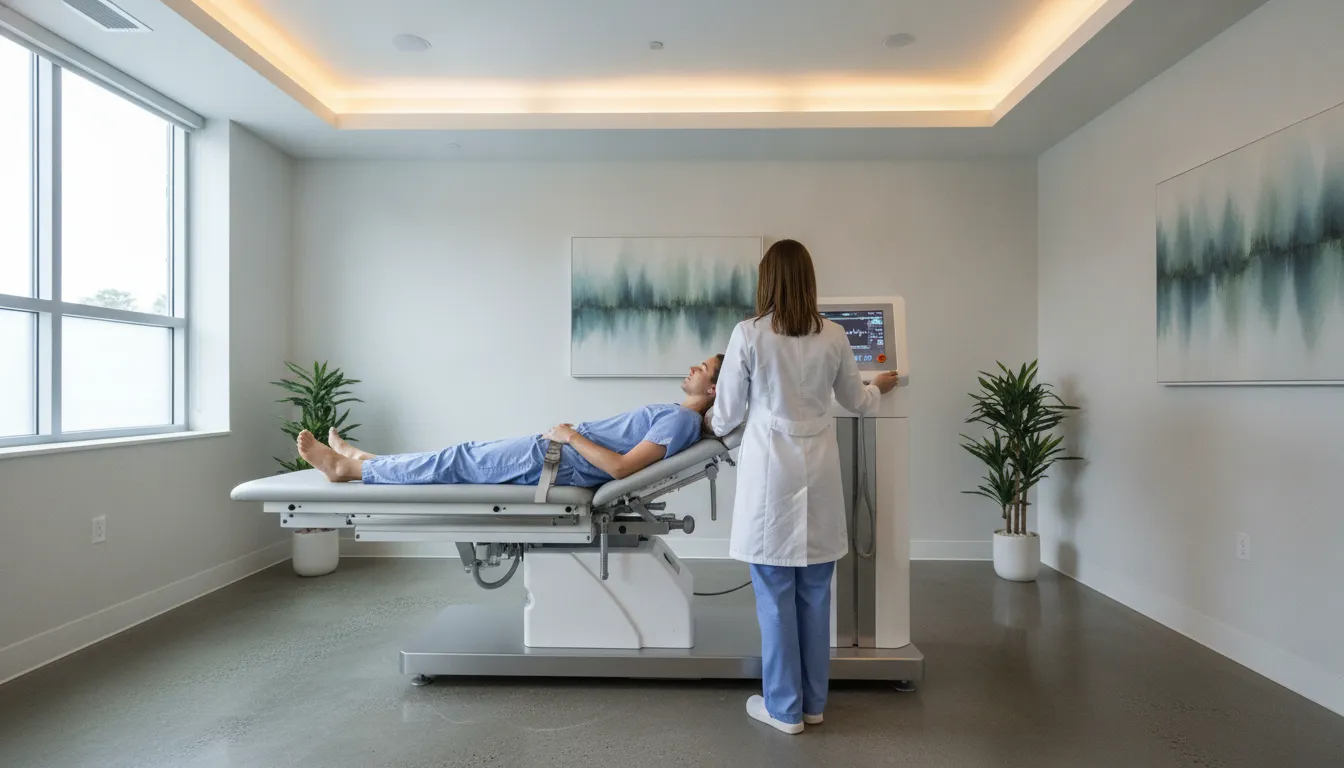
Most patients follow a schedule of 20 to 28 sessions spread over 5 to 7 weeks, with each session lasting about 20 to 30 minutes. Because every spine is unique, your care team will build a plan tailored to your exact anatomy, pain level, and health history.
Your Initial Evaluation
Your journey begins before you ever lie down on the treatment table. A doctor must first check if you are a good candidate for this care. During this first visit, your provider will review your complete health history. They will also look at your physical movement and check your pain points. An important step in this phase is the study of spinal scans. Your doctor will review your MRI or other imaging results to see the exact state of your discs and joints. This deep look ensures that stretching your spine is safe and helpful for your specific back or neck condition.
How a Decompression Session Feels
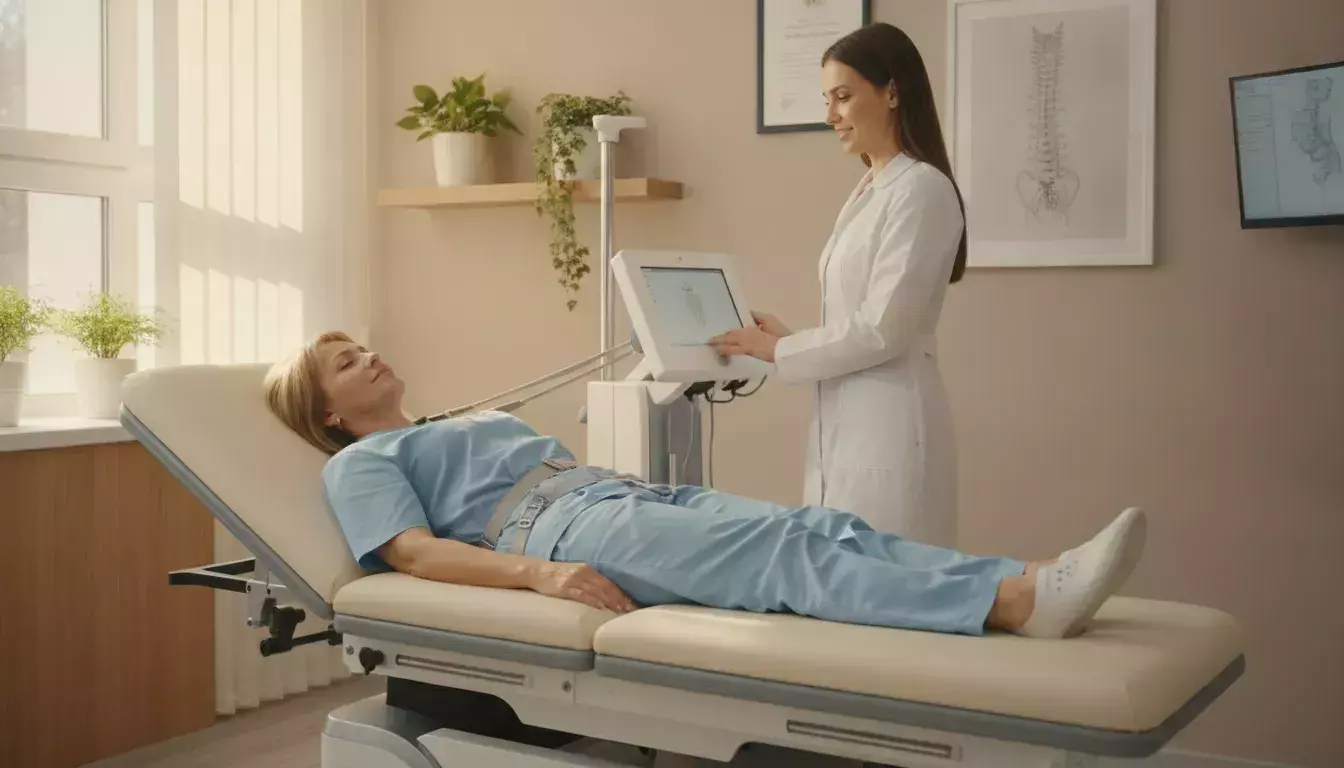
When you arrive for your first treatment session, you will remain fully clothed. You will lie down on a computer-controlled table. The clinical team will place a harness around your hips and another harness around your torso. These harnesses help hold your body in the right spot and guide the gentle pull. During the session, the motorized table slowly moves to stretch your spine and then relax. This cycle of pulling and relaxing creates a gentle stretching sensation. Many patients find this feeling so relaxing that they fall asleep during their care. You will not feel sharp pain, only a deep, controlled release of pressure in your back.
The Phases of Your Recovery
Your treatment plan moves through distinct stages as your spine heals:
- Early sessions (weeks 1-2): Your body begins to adjust to the gentle movement. You may start to feel a reduction in your daily pain as pressure on your nerves decreases.
- Middle phase (weeks 3-5): Disc healing often speeds up. The negative pressure from the table helps pull vital fluids and oxygen back into your worn discs. This process supports the natural repair of damaged tissue.
- Late phase (weeks 6-7): Treatments focus on locking in these positive changes. This stage helps stabilize your spine so you can enjoy lasting relief and get back to your active daily life.
Post-Session Care and Consistency
What you do after you leave the table is just as vital as the treatment itself. Your care team will advise you to drink plenty of water after each visit. Good hydration helps your spinal discs absorb fluid and stay healthy. You should also rest when needed and focus on gentle movement rather than heavy lifting or hard workouts. The most critical part of your plan is staying consistent. Missing scheduled visits can slow your recovery. Each session builds on the last one to create lasting space between your vertebrae. For the best long-term results, many patients benefit from a comprehensive care approach that pairs spinal decompression therapy with other advanced options.
Does Spinal Decompression Therapy Actually Work?
When you deal with persistent back or neck pain, finding a treatment that provides real relief is your top priority. You want to know if a therapy has solid evidence behind it before you invest your time. Clinical research shows that spinal decompression therapy is highly effective for many people. In fact, a study published by the National Institutes of Health (NIH) reported that 86% of patients with ruptured discs achieved good to excellent results. This is a major improvement compared to only 55% of patients who received standard traction therapy.
Understanding the Mechanism of Relief
To understand why this treatment works, it helps to look at how it affects your body. The therapy uses computerized traction to gently stretch your spine. This gentle stretching action creates a state of negative pressure inside the damaged spinal discs. That negative pressure works like a vacuum to help draw herniated or bulging disc material back into its proper place. At the same time, this vacuum effect pulls water, oxygen, and healing nutrients into the disc. This process helps your body heal from the inside out.
What Good to Excellent Results Mean for You
When studies talk about good to excellent outcomes, they are measuring changes that make a real difference in your daily life. For most patients, this means a major reduction in daily pain. It also means you can move more easily and get back to your favorite activities. Whether your goal is to walk around your neighborhood, play with your grandkids, or work without pain, this treatment helps you regain your freedom. Many people also find that they can sleep better and reduce their reliance on pain medications.
Factors That Influence Your Success
- Consistency: Attending all scheduled sessions gives your spine the best chance to heal fully.
- Hydration: Your spinal discs need water to heal and stay cushioned, so drink plenty of fluids.
- Posture: Maintaining good posture during your daily routine helps protect your spine between visits.
- Activity modifications: Making minor changes to avoid extra stress on your back supports your recovery.
Working closely with your care team and attending all scheduled sessions will give you the best chance of long-term relief.
How to Track Your Progress
Your treatment plan is a journey, and your provider will help you track your progress along the way. You will likely monitor how your pain levels change during daily tasks. You will also look at how far you can bend, walk, or reach without discomfort. Some patients feel relief within their first few visits, while others notice a gradual change over several weeks. Your clinical team will evaluate your response at regular points to ensure your treatment stays on track.
Combining Spinal Decompression with Other Therapies
Spinal decompression therapy is highly effective on its own. However, it is often combined with other treatments for optimal outcomes. This comprehensive care approach allows us to address different aspects of your spinal health at the same time. While decompression works to relieve pressure on your discs and nerves, complementary therapies can focus on reducing inflammation, strengthening supporting muscles, and accelerating tissue repair. Combining these treatments helps you get faster, long-term relief.
Physical Therapy and Core Strengthening
Physical therapy is a common treatment paired with spinal decompression therapy. Decompression sessions help relieve pressure on pinched nerves and discs. This relief often provides a significant reduction in daily pain. Once your pain is manageable, physical therapy exercises can help you build strength in the muscles that support your spine. Improving your core strength helps stabilize your back. This stabilization reduces the load placed on your discs and works to prevent future spinal injuries.
Cold Laser Therapy for Inflammation
Cold laser therapy is another excellent addition to a spinal decompression treatment plan. This non-invasive treatment uses specific wavelengths of light to penetrate deep into damaged tissues. The light energy helps stimulate cellular activity that can reduce inflammation and accelerate the healing process. When used alongside spinal decompression therapy, cold laser therapy can help soothe irritated nerves. Pairing these two options can speed up your recovery and offer deep pain relief during treatment sessions.
Regenerative Medicine Options
Integrating spinal decompression therapy with regenerative medicine options can be a powerful way to promote tissue healing. Decompression therapy creates negative pressure inside the spinal discs. This pressure helps pull herniated or bulging material back into place and allows nutrients to flow in. At the same time, regenerative treatments like Platelet-Rich Plasma (PRP) therapy can be used to help repair the damaged outer layers of the disc. The chiropractic care team at Preferred Regen ATL offers advanced options that combine non-surgical decompression with these therapies. This combination helps address structural issues while actively supporting the body's natural healing processes.
Related Services That Complement Your Care
Preferred Regen ATL offers several additional services that pair well with your spinal decompression treatment plan. PRP therapy uses your body's own growth factors to support tissue repair in joints and soft tissues. For patients dealing with both back and knee pain, non-surgical knee decompression provides a similar gentle approach for the knees. Our long-term back pain solutions article covers additional strategies you can use alongside your decompression plan.
Frequently Asked Questions
What conditions can spinal decompression therapy treat?
Spinal decompression therapy treats several neck and back conditions. These include herniated discs, bulging discs, sciatica, and spinal stenosis. It also helps patients with facet joint syndrome, degenerative disc disease, and chronic back pain. Doctors often suggest this treatment as a safe way to avoid spine surgery.
How long does a spinal decompression treatment plan last?
A typical plan includes 20 to 28 sessions spread over five to seven weeks. Each visit lasts about 30 to 45 minutes. Your provider will set the exact number of sessions based on your pain level and health goals. Most patients need this full series to get the best results.
Is spinal decompression therapy painful?
No, this therapy is not painful. Most patients feel a gentle stretch in their spine during the session. Many people find the process relaxing and some even fall asleep on the table. You may feel mild muscle soreness after your first few visits as your body adapts.
Can you combine spinal decompression with other treatments?
Yes, you can combine this therapy with other care plans. Many clinics use it alongside physical therapy, deep tissue work, and cold laser therapy. It also works well with regenerative medicine like platelet-rich plasma to help speed up your natural joint healing.
Does spinal decompression therapy really work?
Yes, clinical research shows strong results for this treatment. In a study from the National Institutes of Health, 86 percent of patients with ruptured discs reported good to excellent results. This success rate was much higher than the 55 percent rate from standard traction.
Ready to Schedule Your Spinal Decompression Consultation?
Living with chronic back pain, sciatica, or a bulging disc often means missing out on the daily Atlanta activities you love. Over time, leaving spinal nerve pressure untreated can allow disc damage to worsen, which may lead to more severe discomfort and a much longer recovery process. Taking action now with a personalized, non-surgical treatment plan helps relieve deep disc pressure and brings nutrient-rich fluids back into the spine to support real healing. Our clinical team at Preferred Regen ATL is ready to help you find lasting relief. Restore your mobility, and get you back to the activities that matter most to you.
Ready to start your journey toward a pain-free life? Call Preferred Regen ATL at 404-888-0666 today to schedule your free consultation. Your path to relief begins with a single conversation.
Persistent back pain that disrupts your daily routine can make even simple tasks feel impossible. Many people think surgery is the only path to real relief from severe spinal disc issues. However, non-surgical spinal decompression therapy offers a gentle and effective way to heal your spine without any incisions.
Spinal decompression therapy is a non-surgical treatment that gently stretches the spine to relieve chronic back and neck pain. The treatment uses a motorized traction table to create negative pressure within your spinal discs. This negative pressure helps pull herniated or bulging disc material back into place while drawing nutrient-rich fluids and oxygen into the damaged area to promote natural healing. Most patients require a customized treatment plan consisting of twenty to twenty-eight sessions over five to seven weeks. This structured approach helps heal damaged spinal discs, reduce nerve pressure, and restore pain-free movement so you can get back to your favorite activities.
Ready to explore relief? Call Preferred Regen ATL at 404-888-0666 to schedule a free consultation and learn if spinal decompression therapy is right for you.
If you are struggling with severe disc pain, you likely want to know how this treatment works and what your visits will look like. Understanding the process can help you feel more comfortable as you start your healing journey. Let us look at what is spinal decompression therapy and how it can help you find lasting relief.
What Is Spinal Decompression Therapy
Spinal decompression therapy is a gentle treatment that stretches your spine to relieve pressure. This method helps people who deal with severe back or neck pain from damaged discs. Your spinal discs are soft cushions between your bones that act as shock absorbers. Because these discs do not have their own blood supply, they rely on movement to stay healthy. This non-surgical spinal decompression process helps the spine heal without the need for invasive surgeries.
How the Negative Pressure Mechanism Works
This therapy works by creating a negative pressure, or vacuum effect, inside your spinal discs. When the machine stretches your spine, it lowers the pressure within the targeted disc space. This drop in pressure does two key things to help you heal. First, it helps pull bulging or herniated disc material back into its proper place. Second, because discs are avascular, meaning they lack blood vessels, they need help to get nutrients. The vacuum effect draws in water, oxygen, and rich fluids to help the damaged disc heal.
The Physical Setup and Computerized Table
During a session, you lie on a specialized computerized table that is split into two halves. You wear a support harness around your hips and another one around your torso to keep you secure. A trained technician inputs your specific details into the computer system. The system then slowly pulls the lower half of the table while the upper half stays still. This precise pull targets the exact spinal segments that are causing your pain.
Spinal Decompression versus Basic Traction
You might wonder how this therapy differs from simple traction. Basic traction stretches your entire spine all at once, which can cause your muscles to spasm and fight back. In contrast, spinal decompression therapy uses smart sensors to bypass your body's natural guard reflex. The computerized system alternates between gentle pulling and brief resting phases. This pressure cycling relaxes your back muscles so the spine can stretch without pain or tension.
Comparing Non-Surgical and Surgical Decompression
When you look at your options, you will find both surgical and non-surgical paths to find relief. Surgical options like a laminectomy or a microdiscectomy physically remove bone or disc tissue. These procedures require incisions, carry surgical risks, and often need a long recovery time. Non-surgical spinal decompression therapy offers a much safer path. There is no downtime, no risk of infection, and no need for strong pain medications after your session.

Lindsay GoMega
Contact Me