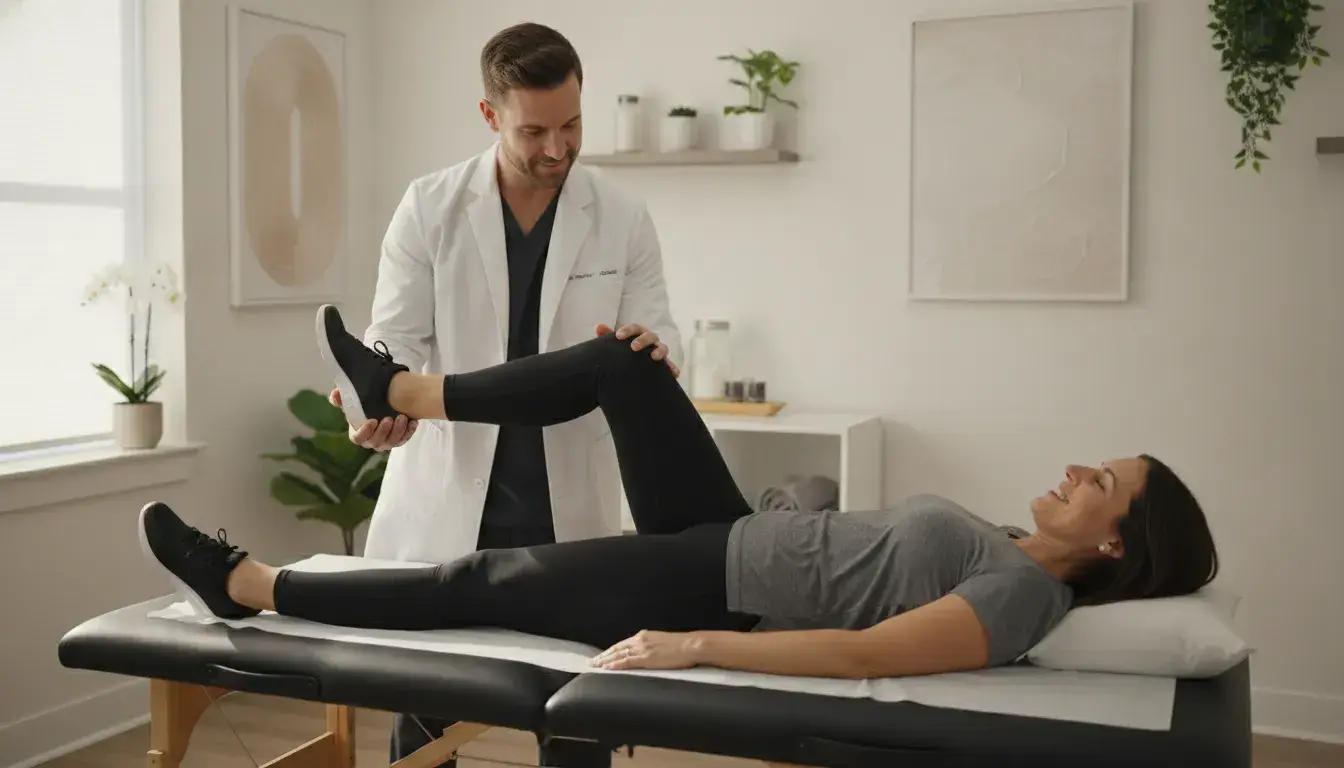
Knee discomfort can change how you climb stairs, train, work, or move through an ordinary Atlanta day. The location and timing of symptoms matter, but they do not identify a diagnosis by themselves. Pain after activity, stiffness when you first move, or discomfort with squatting can each provide useful context to discuss with a qualified clinician.
Call Preferred Regen ATL at 404-888-0666 to discuss a knee mobility evaluation.
An Atlanta chiropractor for knee pain may help evaluate movement patterns, activity triggers, and mobility goals as part of a conservative care discussion. That evaluation should remain educational and individualized, with referral for medical or specialist assessment when symptoms require it.
A thoughtful next step is to look beyond the painful spot and consider how the hip, knee, ankle, and daily activities work together. That broader perspective can make it easier to recognize useful patterns and decide what questions to bring to an evaluation.
What Knee Pain Can Tell You About Your Movement
Knee discomfort often becomes easier to describe when you pay attention to when it appears, what movement brings it on, and how long it lasts afterward. That information does not diagnose the cause, but it can help a clinician understand your starting point and decide whether further evaluation is appropriate.
For adults age 45 and older, knee pain related to activity with no morning stiffness or stiffness lasting less than 30 minutes can fit a pattern commonly associated with osteoarthritis. Osteoarthritis, patellofemoral pain, and meniscal tears are among the common causes of knee pain, and they can be associated with meaningful limits on daily activity. These patterns overlap, so they should not be treated as a self-diagnosis. A clinical review of common knee conditions explains why history and examination matter.
Age and activity context can also shape the questions worth asking. Patellofemoral pain commonly affects physically active people younger than 40. Discomfort toward the front of the knee during a squat may be one feature clinicians consider, especially when it affects training, stairs, or getting up from a chair. A twisting injury, a sudden change in activity, or pain that follows a specific incident may provide different context than gradually developing soreness.
Before an appointment with an Atlanta chiropractor for knee pain, note whether symptoms occur during walking, running, squatting, stairs, or prolonged sitting. Also record swelling, catching, instability, or difficulty bearing weight. This simple movement history can support a focused conversation about mobility and next steps. If symptoms are severe, sudden, or accompanied by deformity, fever, or inability to bear weight, seek prompt medical evaluation rather than delaying for a routine visit.
Active adults may also find it useful to review Atlanta chiropractic sports injury care when knee symptoms began around training or another physical activity.
How an Atlanta Chiropractor for Knee Pain May Evaluate Your Symptoms
A thoughtful evaluation begins with a conversation, not a one-size-fits-all adjustment. You may be asked when the discomfort started, whether it followed a fall or twist, and what has changed since then. Bring up prior injuries, surgeries, health conditions, medications, and any care you have already tried. These details help a provider understand the context and decide whether chiropractic mobility support is appropriate.
Your history and activity triggers
Describe the activities that bring on symptoms as specifically as possible. Does discomfort appear during stairs, squats, running, cycling, standing, or after sitting for a long time? Note whether the knee feels stiff, swollen, unstable, or limited in its range of motion. An active Atlanta adult may notice a different pattern during training than a professional who spends much of the day seated. Clear examples can make the discussion more useful without requiring you to label the condition yourself.
Movement and function assessment
The provider may observe walking, standing, balance, and selected movements such as a squat or step. They may compare movement on both sides and assess joint motion, surrounding muscle function, and areas that may influence how you load the knee. Knee osteoarthritis, patellofemoral pain, and meniscal tears are among the common causes of knee pain and can be evaluated clinically, although symptoms can overlap. A clinical review describes these conditions as capable of causing significant disability, which is one reason a careful assessment matters (review of common knee pain conditions).
What happens after the assessment?
Preferred Regen ATL describes its care process as consultation, assessment, a customized plan, implementation, and maintenance. Ask what the evaluation found, what it cannot determine, how progress would be monitored, and when reassessment would occur. A chiropractic evaluation does not identify every possible cause of knee symptoms or replace urgent medical or specialist care. Sudden severe pain, major swelling, deformity, inability to bear weight, fever, or symptoms after significant trauma warrant prompt medical attention and may call for imaging or referral.
Conservative Mobility Support for Knee Pain
Conservative mobility support starts with keeping movement purposeful and manageable. Rather than stopping every activity at the first sign of discomfort, a clinician may help you identify which movements, loads, or training habits are aggravating your knee and adjust them while you build capacity. That might mean shortening a walk, reducing hills temporarily, choosing lower-impact conditioning, or taking recovery days between demanding sessions. The right modification depends on your symptoms, activity goals, and overall assessment.
Exercise is a central part of first-line conservative care for several common knee conditions. A gradual plan may include comfortable range-of-motion work, strengthening, balance practice, and a measured return to activities that matter to you. For patellofemoral pain, the evidence review linked below identifies hip and knee strengthening as recommended approaches. Foot orthoses or patellar taping may sometimes be considered alongside strengthening, rather than used as a stand-alone answer. Read the clinical review of common knee pain conditions and conservative care for the evidence context.
Education matters because self-management is easier when you understand what your plan is trying to accomplish. Ask what level of discomfort is acceptable during an exercise, which changes should prompt you to pause, and how progress will be reassessed. Tracking walking tolerance, stair comfort, exercise response, or recovery time can give you and your clinician useful information without turning every day into a pain score.
If your knee concern began during running, field sports, lifting, or another activity, the clinic's guide to Atlanta chiropractic sports injury care may provide helpful context. A mobility plan should remain individualized. Chiropractic support should not replace prompt medical evaluation for severe or sudden symptoms, deformity, fever, marked swelling, or an inability to bear weight.
What Should You Ask About a Knee Care Plan?
A clear care plan should help you understand what will be evaluated, what you can do between visits, and how progress will be reviewed. Preferred Regen ATL describes its process as consultation, assessment, a customized treatment plan, implementation, and maintenance. Use that framework to make the conversation specific to your goals and daily life.
- What is the goal of this plan? Ask whether the focus is improving a particular movement, supporting activity tolerance, or building a practical self-management routine. The goal should be clear without promising a specific result.
- What did the assessment find? Ask the provider to explain relevant movement findings in plain language and how they relate to your activities. If the findings are uncertain, ask what questions remain open.
- What should I do at home? Ask which activities to continue, modify, or pause, and how to adjust them if symptoms change. Request clear instructions for any mobility or strengthening work.
- How will we measure progress? Possible measures may include a movement you want to perform more comfortably, activity tolerance, or changes in day-to-day function. Ask when those measures will be reviewed.
- When will we reassess the plan? Ask how often the plan will be revisited and what would prompt a change. A plan should allow room for new information rather than continuing automatically.
- When should I coordinate with another clinician? Ask what symptoms, examination findings, or lack of progress would warrant medical, imaging, or specialist evaluation. Chiropractic care should support informed decisions, not replace appropriate medical assessment.
These questions can help you compare options thoughtfully when speaking with an Atlanta chiropractor for knee pain. A transparent provider should welcome them and explain the boundaries of the proposed care.
When Should Knee Pain Be Referred for Imaging or Specialist Care?
A careful evaluation does not always begin with an X-ray or MRI. For possible knee osteoarthritis, routine radiographs for every patient are not recommended. A clinician can often start with your history, symptom pattern, movement, and physical examination, then decide whether imaging would change the next step. This approach helps avoid treating a scan instead of treating the person.
That pathway can change after a significant injury or when symptoms are unusually severe. Seek urgent medical care for sudden or severe knee symptoms, an obvious deformity, inability to bear weight, fever, or major swelling. These signs should not be managed as a routine mobility concern. A twisting injury followed by marked instability, a locked knee, or rapidly increasing swelling also deserves prompt assessment. The goal is not to label the problem from a blog post, but to make sure the right level of care is involved early.
When imaging or specialist input may help
Referral may be appropriate when a traumatic injury raises concern for a significant internal injury, when function is sharply limited, or when symptoms do not improve with an appropriate conservative plan. The research review notes that severe traumatic bucket-handle meniscal tears, involving displaced tissue, may require surgery. That is different from many degenerative meniscal findings, for which exercise therapy is commonly considered first-line care. The same review does not recommend surgery for degenerative tears solely because someone reports mechanical symptoms such as catching or locking. Decisions still depend on the full clinical picture.
For advanced osteoarthritis, a specialist discussion can be considered when symptoms remain difficult to manage after appropriate conservative options have been tried. An Atlanta chiropractor for knee pain should be clear about the limits of a chiropractic evaluation and coordinate or refer when medical or orthopedic assessment is more appropriate. Preferred Regen ATL describes care as consultation, assessment, a customized plan, implementation, and maintenance, with informed decisions taking priority. You can review the evidence in this PubMed review of common knee conditions and their management.
How Chiropractic Mobility Care Compares With Other Knee Support Options
Several forms of knee support can have a place in a thoughtful care plan, but they answer different questions. The best starting point is usually a clear evaluation of your symptoms, movement, activity demands, and goals. From there, you can decide whether mobility support, self-management, medical evaluation, or another option deserves attention.
| Option | Primary focus | Questions to consider |
|---|---|---|
| Evaluation and mobility support | Understanding movement, function, and activity-related concerns, then planning appropriate mobility support. | What movements are limited? What goals should be measured? When should the plan be reassessed? |
| Exercise and self-management | Building practical habits that support strength, activity tolerance, education, and day-to-day decision-making. | Which exercises are appropriate for your current ability? How can activity be adjusted without losing useful movement? |
| Medical or specialist evaluation | Investigating concerns that may require medical diagnosis, imaging, medication guidance, or specialist care. | Are symptoms worsening, following significant trauma, or limiting function enough to warrant prompt medical review? |
| Non-surgical knee decompression | A clinic-listed option using Knee-on-Trac as part of the practice's non-surgical decompression services. | Is this option appropriate for your situation, and how would it fit with evaluation and other recommended care? |
Exercise, education, and self-management are central to first-line conservative care for several common knee conditions. A mobility-focused visit should support those principles rather than replace them. Depending on the findings, a plan may include consultation, assessment, a customized approach, implementation, and maintenance. That process should also leave room for referral when the concern falls outside the scope of chiropractic care.
Preferred Regen ATL lists non-surgical knee decompression options for people who want to learn more about that service. The page can explain the clinic's approach, but it cannot determine whether decompression is appropriate for an individual. Ask about the purpose of each option, how progress would be reviewed, and what other evaluation may be needed. No single choice fits every person or every knee concern.
A Practical Next Step for Atlanta Knee Mobility
Before speaking with an Atlanta chiropractor for knee pain, write down when the discomfort began, which activities trigger it, and what movement you want to regain. Include relevant injuries, changes in training or work demands, swelling or stiffness, and any care you have already tried. This gives the clinician a clearer starting point than trying to remember details during the visit.
Bring a short list of questions, such as: What might be contributing to my movement limits? Which activities should I modify for now? How will we measure progress? What can I safely practice at home? When should we reassess the plan, and when would another medical professional be appropriate?
A first conversation at Preferred Regen ATL may include consultation, assessment, a customized plan, implementation, and maintenance. The clinic describes its approach as evidence-based, transparent, and compassionate, with the goal of helping patients make informed decisions. It also serves active adults and professionals managing sports or activity-related injuries. You can learn more about the broader approach in this guide to chiropractic pain relief in Atlanta.
Chiropractic care should not replace urgent or specialist evaluation when symptoms are severe, sudden, or concerning. A careful conversation can help clarify an appropriate next step without promising a specific outcome.
Call Preferred Regen ATL at 404-888-0666
Frequently Asked Questions
Can chiropractic care help with knee pain?
It may provide conservative mobility support for some people, depending on the cause, symptoms, and overall health. A thoughtful plan may include movement education, activity modification, and exercises that support strength and function. Chiropractic care should complement, not replace, appropriate medical assessment when symptoms are severe, persistent, or unusual. Your response should be monitored, and the plan adjusted if it is not meeting your goals.
How can a chiropractor in Atlanta evaluate knee pain?
An evaluation typically begins with your history, including when symptoms started, what activities affect them, prior injuries, and any changes in walking or daily function. The provider may observe movement and perform appropriate physical tests, then explain whether conservative mobility care appears reasonable. This process can help organize next steps, but it does not rule out every medical condition. Bring a list of symptoms, relevant records, and questions about your activity goals.
Do you need imaging before seeing a chiropractor for knee pain?
Not necessarily. Routine radiographs for every person with possible knee osteoarthritis are not recommended, so imaging decisions should depend on clinical findings and the individual situation. A clinical review supports evaluating the presentation first. A provider should refer you for imaging or specialist care when trauma, suspected instability, severe symptoms, or another concern makes additional evaluation appropriate.
What should I ask an Atlanta chiropractor about a knee-pain care plan?
Ask what the evaluation found, what goals the plan is designed to support, which activities to modify, and what you can safely do at home. Also ask how progress will be measured, when the plan will be reassessed, what changes would prompt referral, and how the provider will coordinate with your physician or specialist. A clear process should include consultation, assessment, a customized plan, implementation, and maintenance, without promising a specific outcome.
Schedule Your Knee Mobility Evaluation
A thoughtful evaluation can help clarify which movements, activities, and care-plan questions deserve attention before you decide on next steps. If you are exploring conservative support for knee mobility in Atlanta, talk with the Preferred Regen ATL team about your concerns and goals.

Lindsay GoMega
Contact Me