A sports injury does not always announce its seriousness. A sharp twist, a gradually worsening ache, or a familiar problem returning during training can all raise the same practical question: what should you do next?
Call 404-888-0666 to discuss an evaluation.
An Atlanta chiropractor for sports injuries may be a reasonable starting point when you need a careful assessment of how an injury happened. How it affects movement, and whether conservative care fits your situation. A sports-injury evaluation generally includes a detailed history and physical examination, with testing or referral when needed. MSD Manual guidance notes that the history should consider the injury mechanism, activity stresses, previous injuries, and when symptoms occur.
For active Atlanta professionals and athletes, the right next step depends on the injury, your current function, and any warning signs. Start by considering when an evaluation is appropriate, then ask how a personalized plan could support a gradual return to activity.
When Should You See an Atlanta Chiropractor for Sports Injuries?
Active Atlanta professionals and athletes do not always know whether a sore shoulder. Tight back, or painful knee is something to monitor or a reason to schedule an evaluation. Sports injuries can involve overuse, blunt trauma, fractures or dislocations, or acute sprains and strains. A sprain affects a ligament, while a strain affects a muscle. Those categories can overlap in how they feel, so pain alone should not be used to identify the injury.
An appointment with an Atlanta chiropractor for sports injuries may be useful when discomfort changes how you move, limits a favorite activity, returns each time you train, or follows a specific incident. Preferred Regen ATL describes its sports-injury care as serving both fresh and recurring injuries. Its sports injury chiropractic care is intended to begin with an individualized assessment rather than a one-size-fits-all assumption about the cause.
Pay attention to the pattern, not just the intensity
Notice when symptoms began and what was happening at the time. An increase in running, lifting, throwing, cycling, or court time may point to repeated stress. A collision, awkward landing, sudden twist, or direct blow creates a different context. Also consider whether discomfort appears during activity, afterward, or even at rest. Previous injuries are worth mentioning because they can be relevant to how a new problem is evaluated.
Persistent pain deserves particular attention. The MSD Manual recommends specialist evaluation when pain continues for more than 72 hours after an apparently minor injury, because a more significant injury may need consideration. That guidance is not a diagnosis, and urgent symptoms require medical care rather than waiting for a chiropractic visit. If the problem is lingering, recurring, or affecting normal movement, an evaluation can help clarify appropriate next steps and whether referral is needed.
What Happens During a Sports-Injury Evaluation?
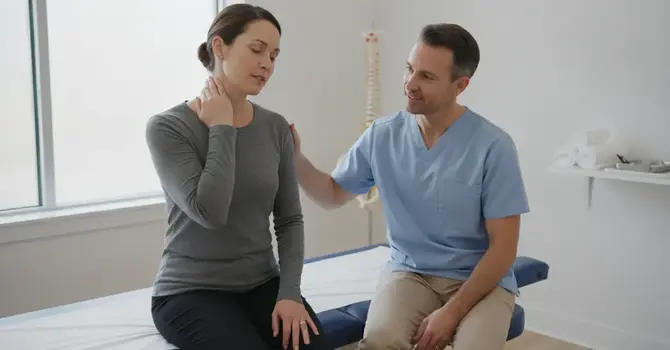
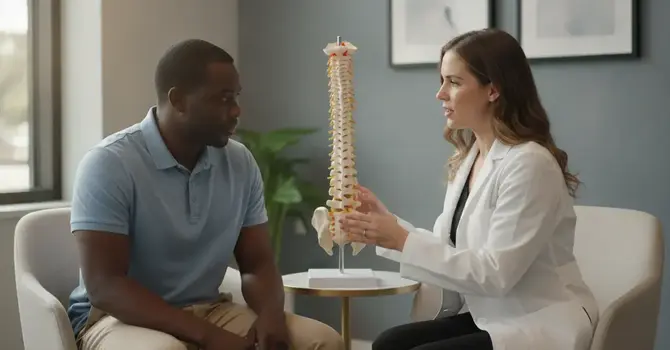
An evaluation begins with a conversation, not a diagnosis made from a single symptom. A clinician may ask how the injury happened, what activity or training load preceded it. Whether the pain began suddenly or gradually, and how it feels before, during, and after exercise. Sports injuries can involve overuse, blunt trauma, fractures or dislocations, and acute sprains or strains. A sprain affects a ligament, while a strain affects a muscle. Learn more about the clinical approach to sports injuries.
Your history and activity pattern
Expect questions about previous injuries, recent changes in training volume, recovery time, equipment, and the movements that reproduce your symptoms. Prior injury can be one factor associated with overuse concerns, so details that seem unrelated may help create a clearer picture. You may also be asked about your goals, such as returning to running, lifting, court sports, or another activity. Bring any relevant medical records or imaging reports if they are available.
Movement, function, and examination
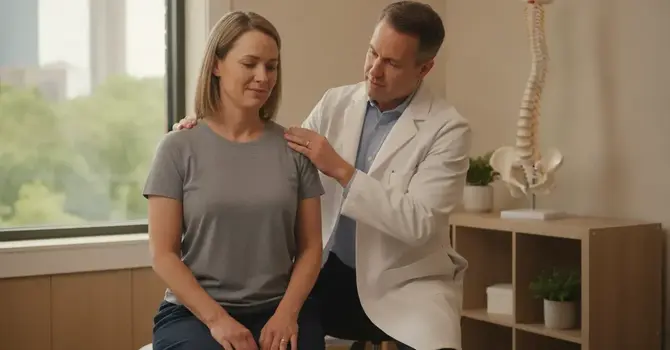
A thorough sports-injury evaluation includes a history and physical examination. The clinician may observe posture, gait, range of motion, balance, strength, coordination, and sport-related movement. They may also assess the painful area and compare function on both sides when appropriate. These steps help determine what can reasonably be addressed in a conservative care setting and what may need additional evaluation.
Imaging or referral to another medical professional may be considered when the findings call for it. At Preferred Regen ATL, the care pathway is described as consultation, assessment, a customized treatment plan, implementation, and maintenance. Its sports-injury service addresses fresh and recurring injuries, but individual treatment choices depend on the assessment. You can review the clinic's sports injury chiropractic care options before your visit.
Which Sports-Injury Symptoms Need Medical or Urgent Care?
Some sports injuries can be appropriate for a planned evaluation, while others need prompt medical attention. Persistent pain after an apparently minor injury deserves specialist evaluation because the original injury may be more significant than it first appeared. The MSD Manual's sports-injury guidance notes that additional testing or referral may be needed when symptoms do not settle as expected.
Do not try to manage a possible emergency through chiropractic care. If you have severe symptoms, a visible deformity, or concern for a fracture, dislocation, or serious neck or spine injury, seek medical assessment promptly. Call emergency services when the situation appears life-threatening, and follow the instructions of emergency professionals.
After a head impact, watch for concussion red flags
If a head impact occurred and a concussion is suspected, remove the athlete from play immediately. Do not let the athlete return to practice or competition simply because symptoms improve. Chiropractic care does not replace emergency or medical evaluation for a head injury.
Emergency assessment is especially important when any of these warning signs are present:
- Worsening or severe headache.
- Repeated or persistent vomiting.
- Loss of consciousness.
- A seizure or convulsion.
- Neck pain, cervical tenderness, limited movement, or a visible deformity.
- Confusion, increasing drowsiness, or other deterioration in neurological status.
- Focal neurological symptoms, such as persistent tingling, weakness, or double vision.
These signs are identified in the team-physician concussion consensus statement and the 2024 Canadian Guideline on Concussion in Sport.
When red flags are present, emergency medical professionals should assess the athlete. For symptoms that are concerning but not emergent, contact a qualified medical provider before scheduling supportive care.
How Can Mobility-Focused Chiropractic Care Support Recovery?
Mobility-focused care starts with a practical question: what movement can you do safely today, and what should wait until the injured area has been assessed? The MSD Manual advises avoiding the activity that caused the injury until healing occurs. That does not always mean complete inactivity. For a mild injury, a clinician may help you identify comfortable movements and an appropriate progression based on your symptoms, function, and goals.
Modify the trigger without abandoning movement
If running, lifting, swinging, or another repeated activity brings on pain, temporarily reducing or modifying that activity can limit additional irritation. Pain-free cross-training may help maintain conditioning, but only when the substitute does not cause pain or reinjury. Options depend on the injury and may include a different type of low-impact movement, shorter sessions, or a reduced range of motion. Your plan should change if symptoms increase rather than asking you to push through them.
Exercise for a previously injured area is generally introduced at low intensity. The goal is controlled movement and gradual strengthening, not an immediate return to full-intensity training. Maintaining usable range of motion can be more helpful than rushing back because you are concerned about losing fitness. A gradual approach also gives you opportunities to notice how the area responds during and after activity.
Build an individualized plan
Preferred Regen ATL describes its care pathway as consultation, assessment, customized treatment plan, implementation, and maintenance. In sports-injury care, examples of options the clinic lists include spinal manipulation, extremity work, performance optimization, and injury-prevention strategies. These are not automatic recommendations. Their appropriateness depends on the findings of an individual assessment and, when needed, additional testing or referral.
You can learn more about sports injury chiropractic care, including the clinic's approach to fresh and recurring injuries. For a clearer picture of what to expect during chiropractic care and a personalized chiropractic treatment plan, review those guides before your visit. None should replace an evaluation, especially when pain is worsening or function is declining.
What Should You Ask About Returning to Your Sport?
Returning to a favorite sport is more useful as a conversation than a single clearance question. Ask how your symptoms, movement, strength, sport demands, and confidence will be considered together. The British Journal of Sports Medicine consensus describes return to sport as a continuum that develops alongside recovery and rehabilitation, not as one final decision at the end.
Bring specific details about what you want to do again, whether that means running hills, lifting, swinging a racquet, or competing. Then ask questions that help you understand the plan and the point at which activity should be modified, paused, or progressed.
| Question to ask | Why it matters |
|---|---|
| What movements or activities should I modify right now? | Activity can be adjusted while you avoid provoking pain or reinjury. |
| What signs show that my function is improving? | Function, not only symptom intensity, can help guide a gradual progression. |
| How will we test movements that match my sport? | Sport-specific function helps connect general improvement with real activity demands. |
| When should we reassess before I increase intensity? | Repeated evaluations can help inform decisions as symptoms and ability change. |
| What if I feel physically ready but still fear reinjury? | Psychological readiness, including confidence and coping, is part of a thoughtful return. |
The AAOS team-physician consensus identifies health status, symptoms, functional testing, psychological factors, and sport-specific function as relevant considerations. It also emphasizes that decisions depend on the individual facts and circumstances. A clinician, athlete, and coach may need to share information and adjust the plan together.
This decision-support approach differs from a general performance program. The clinic's chiropractic care for athletes guide offers broader performance context, while an injury-focused visit can center on your current symptoms, functional goals, and safe activity progression. There is no universal timeline or guarantee, so ask what would make progression reasonable for you and what should prompt another evaluation.
How Can You Prepare for a Chiropractic Sports-Injury Visit in Atlanta?
A little preparation can make your visit more useful, especially when an injury happened during a fast-moving game, workout, or demanding workday. Preferred Regen ATL works with active professionals and athletes managing fresh or recurring sports injuries, with care built around consultation, assessment, a customized treatment plan, implementation, and maintenance. You do not need to diagnose yourself before you arrive.
- Write down what happened. Note the movement, contact, fall, or training change that preceded your symptoms, along with when discomfort began.
- Describe your activity demands. Bring details about your sport, position, workouts, work tasks, recent increases in intensity, and movements that aggravate or ease the problem.
- Record the symptom pattern. Notice where you feel discomfort and whether it changes before, during, or after activity. Include any prior injury in the same area.
- Gather relevant records. Bring imaging reports, prior treatment notes, medication information, and a list of questions. If you have recent images, bring the report rather than assuming the scan tells the whole story.
- Plan your questions. Ask what the assessment found, whether additional testing or referral may be appropriate, which activities to modify, and how progress will be evaluated.
A thorough history of the injury mechanism, activity stresses, past injuries, timing, and symptom pattern helps guide the conversation. The clinician may also ask about your goals, such as returning to running, lifting, cycling, or a specific Atlanta-area sport. Be candid about what you have tried and whether a movement causes pain. That information supports an individualized discussion rather than a one-size-fits-all plan.
Preferred Regen ATL can explain whether its chiropractic sports-injury services fit your situation after assessment. If you are also researching regenerative approaches, review these sports injury recovery options as a separate treatment resource.
Call 404-888-0666 to discuss preparing for your sports-injury evaluation in Atlanta.
Frequently Asked Questions
Can chiropractors help with sports injuries?
They may help some people with musculoskeletal sports injuries through an individualized evaluation and conservative care plan. Sports injuries can involve overuse, sprains, strains, blunt trauma, or more serious problems. So the first step is determining whether chiropractic care is appropriate or whether testing or referral is needed. A qualified clinician should consider your injury mechanism, symptoms, movement, prior injuries, and activity goals.
What is a red flag in chiropractic?
A red flag is a sign that calls for prompt medical or emergency evaluation rather than routine conservative care. Examples include suspected fracture or dislocation, worsening neurological symptoms, or pain that persists for more than 72 hours after an apparently minor injury. After a head impact, immediate removal from play is advised. Severe or worsening headache, repeated vomiting, seizure, confusion, loss of consciousness, or a focal neurological deficit requires emergency assessment. Source: sports-related concussion consensus guidance.
How do I know when to return to activity?
Return when symptoms and function support a gradual progression, not simply because a certain number of days has passed. Start with low-intensity activity and increase sport-specific demands step by step, stopping if symptoms return or the area is reinjured. Return-to-sport decisions are best made collaboratively with appropriate clinicians, the athlete, and coaches, with psychological readiness considered as well. Source: return-to-sport consensus statement.
What should I bring to an evaluation?
Bring a clear account of when and how the injury occurred. What activity or movement triggered it, when symptoms began, and how they change before, during, and after exercise. Note prior injuries, current symptoms, training demands, and any imaging or medical records you have. This information helps the clinician decide what examination, care plan, or referral may be appropriate.
Schedule Your Sports-Injury Evaluation in Atlanta
If you are weighing your next step after a sports injury. An individualized evaluation can help clarify what to discuss, what questions to ask, and whether conservative care fits your situation. Preferred Regen ATL can help you approach that conversation with a patient-centered plan based on your history and current concerns.
Call Preferred Regen ATL at 404-888-0666 to schedule an evaluation.

Lindsay GoMega
Contact Me