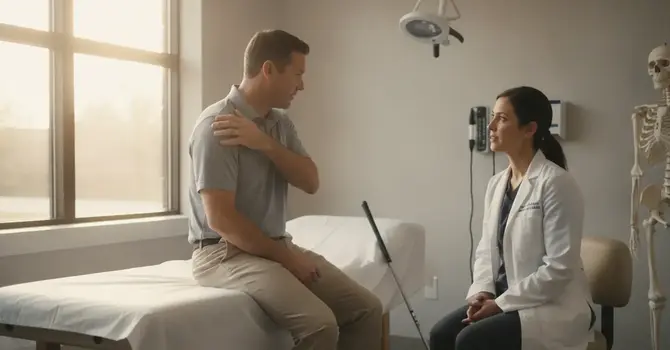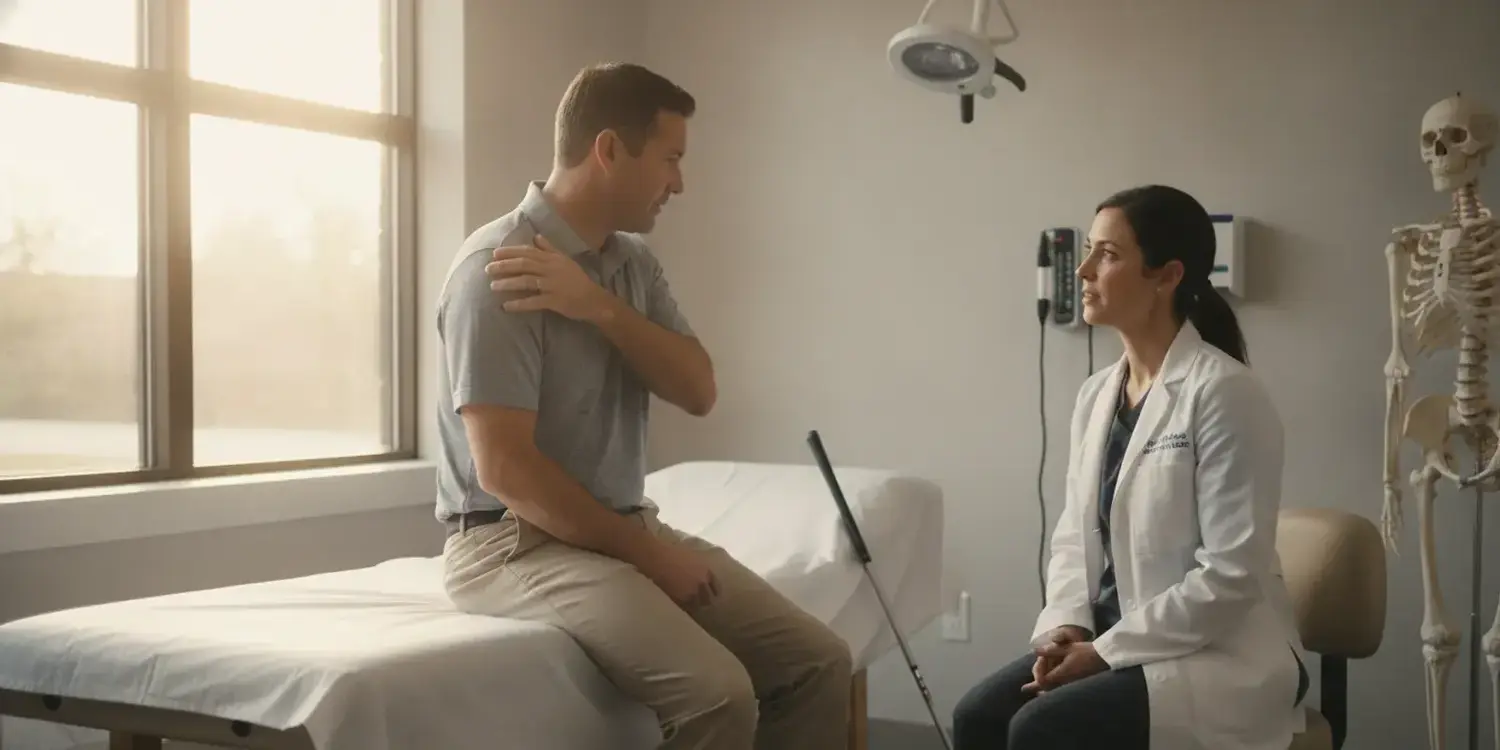
A golf swing asks your body to coordinate balance, rotation, hip and shoulder movement, and repeated force. If a new ache or restriction is changing your game, an Atlanta chiropractor for golf injuries may help you understand whether chiropractic evaluation is an appropriate next step. The aim is not to promise a fast return to the course. It is to clarify what may be contributing to the limitation, what remains uncertain, and which care options deserve discussion.
Schedule a conversation about your golf-related concern
What should an evaluation clarify first?
A useful first visit begins with your experience, not an assumed swing correction. Tell the clinician when the concern began, where you notice it, and which parts of golf or daily life have changed. Explain whether it appeared suddenly or gradually, whether it is more noticeable during the backswing, downswing, follow-through, walking, or ordinary tasks, and whether rest changes how you feel.
Share relevant health history, prior injuries, medications, and any assessment or imaging already completed. Mention recent changes in practice volume, equipment, technique, travel, or time away from golf. These details do not establish a diagnosis on their own. They help the clinician understand the context and decide what areas to examine.
The clinician may ask about movement, function, and symptom response. Ask what the examination can and cannot tell you. If the concern appears to require assessment outside chiropractic care, a responsible next step may be referral to another qualified health professional. A careful visit should make uncertainty clear rather than present one finding as the whole explanation.
How can golf-specific details make the visit more useful?
“My back hurts” is a start, but golf context adds useful detail. You might say that rotation in one direction feels limited, that discomfort appears only after several holes, or that you have changed your stance to avoid a particular motion. Describe the movement rather than repeatedly provoking it. Do not force a swing in the clinic to prove a point; let the clinician decide whether a simple movement check is appropriate.
- Which position or part of the swing brings on the concern?
- Does it happen with every swing, a particular club, or only after a certain amount of play?
- Has walking, balance, grip, sleep, or an ordinary task also changed?
- What have you tried so far, and how did your body respond during and afterward?
- What would you like to do comfortably besides “play again,” such as walking nine holes or practicing short putts?
- Has anything changed recently in frequency of play, warm-up, equipment, or routine?
A short note on timing and activity can help if it is difficult to recall details during an appointment. Record when the issue appears and what you were doing, but do not turn the notes into a self-diagnosis. A swing video might be useful only if the clinician requests it and you can share it safely. A clinician’s role is to assess your health concern, not to replace a golf coach or guarantee a technical change in your swing.
What does a golf movement assessment look at?
Golf requires the body to move through a sequence, but a clinician should not assume that a symptom in one area proves the source lies elsewhere. An assessment may consider how you move through comfortable ranges, how balance and coordination look, and whether a movement brings on the concern. The clinician should explain why a check is relevant and stop if it is not appropriate for your condition.
It can help to distinguish a motion that feels stiff from one that is painful, weak, unstable, or simply unfamiliar. Describe the difference as precisely as you can. For example, “I can turn, but I feel a pull at the end of the motion,” gives a different account from “I cannot complete the turn because the pain stops me.” You need not use medical terms; plain descriptions are often more useful.
Ask how the findings connect to your goals and what they do not establish. A movement observation is not automatically a diagnosis, and a comfortable test movement does not prove that a full round is safe. If you have had a recent fall or other trauma, mention it before any movement testing. If symptoms are severe or unusual, seek medical advice rather than trying to recreate the swing for the visit.
What might mobility-focused chiropractic care involve?
Care depends on your history and examination. A chiropractic discussion may include hands-on assessment or treatment, movement guidance, and a plan for modifying activity. Before agreeing to a proposed step, ask what it is intended to address, what alternatives exist, and what response should lead you to pause or check back. You should have the chance to raise concerns and understand the plan.
Golf links movement across the feet, ankles, hips, trunk, shoulders, and arms. A clinician may discuss mobility or function in more than one area rather than assume that the place you feel discomfort tells the whole story. This does not mean every golfer needs the same intervention, or that a particular restriction is necessarily the cause. Findings should be explained in relation to your symptoms and goals.
Preferred Regen ATL describes its sports injury care as part of its chiropractic services. Depending on your needs, you can ask how an evaluation differs from corrective care or wellness care. These pages can help you prepare questions; they do not determine which service is suitable for a particular concern.
How can you describe your golf demands and goals?
“I want to get back to golf” can mean many things. One golfer may want to walk nine holes with family; another may want to practice at the range or play a full weekend schedule. Naming a specific activity helps make the conversation practical without implying that a particular timeline is guaranteed.
Think through what the activity involves. Walking the course, carrying a bag, riding in a cart, hitting a bucket of balls, and playing a full round place different demands on your routine. Tell the clinician which matters most and what currently feels difficult. If your work or caregiving routine also requires lifting, prolonged sitting, or regular walking, include that context rather than treating golf as the only measure of function.
You can bring questions such as: “Which activities should I discuss before continuing?” “What would count as a reason to pause?” and “When should we review whether the plan is helping?” These questions keep the focus on shared decision-making. They also make it easier to understand the difference between a general suggestion and guidance tailored to your situation.
How should you think about practice and a return to golf?
There is no responsible one-size-fits-all schedule for resuming golf after an injury. The appropriate pace depends on the concern, how you respond to activity, and whether a medical assessment identifies a reason to limit or modify play. A calendar date or one comfortable swing does not establish readiness for a full round.
Ask the clinician which activities are reasonable while you are being evaluated. You can discuss whether to reduce practice volume, avoid a motion that consistently brings on symptoms, or temporarily choose lighter daily activity. These are examples for a conversation, not a prescription. Guidance should reflect your circumstances. Seek medical advice if symptoms worsen, change, or do not behave as expected.
If you and your clinician agree that a gradual return is appropriate, talk through practical checkpoints rather than a promised deadline. These might include tolerating ordinary walking, completing comfortable movements, and increasing practice only as your response allows. A plan could distinguish between short putting practice and a long range session, or between walking nine holes and playing a full round. The point is not to use those examples as a universal sequence; it is to decide what makes sense for you with qualified guidance.
Keep brief notes on the activity, duration, and how you felt during and afterward. A simple record can help you discuss patterns without relying on memory. If a particular activity repeatedly brings on symptoms, report that rather than repeatedly testing it. Stop and seek guidance if a new or concerning symptom appears. These checkpoints support a conversation; they do not guarantee a return date.
What can a practice example teach you?
Consider a golfer whose discomfort is absent during daily tasks but appears after repeated swings at the range. That pattern is useful information, not proof of a specific injury. The golfer can note the approximate amount of practice, which movement seemed relevant, and how long the change lasted, then share that account during an assessment. The goal is not to recreate the episode at home or keep practicing until symptoms intensify.
Another golfer may feel restricted on the first few swings and notice the same limitation while turning to reach for an object. That broader pattern may change the questions asked during an evaluation. In either case, describe what happens without guessing at the cause. The clinician can decide whether movement testing is appropriate and whether another type of assessment is warranted.
These examples show why a useful plan starts with the person’s actual pattern. A golfer who walks comfortably but struggles with repeated rotation has different activity questions from someone whose symptoms affect walking or sleep. Neither example predicts a diagnosis or recovery course. They show the value of explaining context, tracking changes, and asking what should prompt follow-up.
When should you seek medical assessment promptly?
Some symptoms deserve medical attention rather than an attempt to manage the issue through golf-related care alone. Seek urgent help for severe or sudden symptoms, significant trauma, inability to bear weight, marked weakness, new numbness, or loss of normal bladder or bowel control. Chest pain, difficulty breathing, or other emergency symptoms require emergency services.
Arrange appropriate medical evaluation for persistent, worsening, or unexplained symptoms, or when you are unsure whether it is safe to continue an activity. If a symptom changes substantially, affects more than golf, or makes ordinary function difficult, explain that when you seek care. A clinician can help determine whether additional assessment is warranted. General information about back symptoms is available in the National Institute of Arthritis and Musculoskeletal and Skin Diseases overview of back pain; it is not a substitute for individual advice.
How can you compare care options?
Compare options by the questions they answer, not by bold promises. An evaluation should make space for your history, explain its limits, and connect recommendations to your goals. The table below is a conversation aid, not a diagnosis or treatment recommendation. Depending on symptoms and findings, more than one professional or type of assessment may be relevant.
| Option or step | What it may clarify | Questions to ask |
|---|---|---|
| Chiropractic evaluation | Relevant history, movement findings, and whether chiropractic care fits the concern | What did you find, and what remains uncertain? |
| Medical assessment | Whether symptoms need evaluation beyond a chiropractic visit | What symptoms or changes should prompt follow-up? |
| Activity discussion | How golf or practice relates to your current response | What activity is reasonable while I am being assessed? |
| Golf instruction | Technique, equipment, and swing mechanics | Would a qualified golf professional help with technique questions? |
| Follow-up review | Whether symptoms, function, or goals have changed over time | When should we review the plan, and what should I report? |
For practical details about arranging a visit, see the clinic’s about page, review its payment options, or contact the team. The clinic does not take insurance, and no regenerative medicine is covered anyway under insurance; clarify payment questions before committing to care. Golf-related chiropractic care and regenerative medicine are distinct discussions, and no treatment should be assumed appropriate simply because it is available.
How can you prepare for an appointment?
A few minutes of preparation can make a conversation more focused. Write down when the concern began, where you feel it, what activities change it, and whether it is improving, worsening, or staying similar. Keep the list short enough to use during the visit. Include relevant health history and prior evaluation details rather than trying to assemble a complete medical record at the last minute.
Organize your questions by priority. Start with safety and scope: “Does this need another type of medical assessment?” Then ask about the examination: “What does this finding tell us, and what can’t it tell us?” Finally, discuss activity: “What should I monitor, and when should I check back?” If payment or scheduling logistics matter, ask those separately so they do not get confused with clinical recommendations.
It is reasonable to ask for a proposed plan in plain language. You can ask what each step is for, what alternatives exist, and what changes should prompt a call or further assessment. If you do not understand a recommendation, ask the clinician to explain it again. An informed decision is easier when the expected purpose and limits of care are clear.
Frequently asked questions
Can chiropractic care diagnose every golf injury?
No. An evaluation may identify relevant movement findings and help determine whether chiropractic care is appropriate, but it cannot answer every medical question. Ask what further assessment may be needed if the cause is unclear or symptoms persist.
Should I keep playing if my swing only feels a little restricted?
There is no universal answer. Consider whether the restriction is new, worsening, or affecting other activities, and ask a qualified clinician for guidance based on your situation. Do not push through severe or concerning symptoms.
Will a visit tell me when I can play a full round?
Not necessarily. A clinician can discuss findings and help you consider activity, but cannot promise a return-to-play date. Your response over time and any need for further assessment matter.
What should I bring to an appointment?
Bring a concise account of when the concern began, what movements affect it, relevant health history, and a list of questions. Include details of prior assessment or imaging if available.
Contact Preferred Regen ATL to discuss an evaluation
Plan an informed next step
Golf-related movement concerns can have different explanations, so begin with a clear description of your symptoms, goals, and activity demands. A careful evaluation can help you understand possible next steps while keeping safety, individual circumstances, and realistic expectations at the center.

Lindsay GoMega
Contact Me